
Updated: Aug 8
Recently, I have begun exploring the use of AI as a creative assistant in the development of 3D models for augmented reality. This feels like a natural extension of my iPhoneart practice - one that allows familiar themes of presence, perception, and embodiment to move into new spatial territory. By engaging with AI tools, I am opening my work to fresh forms of collaboration and experimentation, translating intuitive image-making into sculptural, immersive experiences that can exist within the viewer’s own environment.

Inspired by the Inuit story of Sedna, Mother of the Sea, the above work whispers a simple truth: when we honour the ocean, the ocean can continue to nourish life.
In Sedna’s Echo, photographed above on the prairies in Alberta, Canada, I continue to explore how the digital can become a vessel for presence and reflection. The figure, calm and poised, holding a staff as a marine creature rests at her feet, embodies both strength and guardianship. She stands as a symbol of our relationship with the living ocean and of the balance between human awareness and the natural world.
Presented in augmented reality, Sedna’s Echo exists only when brought into being by the viewer. Appearing within their own surroundings, she transforms ordinary space into a moment of quiet encounter. This act of placement echoes my ongoing interest in thresholds - between the physical and the virtual, the visible and the invisible - and affirms my belief that art can awaken a deeper sense of connection wherever it appears.
Sedna’s Echo embodies the coexistence of movement and stillness, presence and flux. The figure stands grounded and composed, holding her staff as a marine animal rests calmly at her feet. This stillness is intentional - it acts as an anchor, a moment of pause that invites contemplation rather than urgency.
At the same time, movement is implied rather than enacted. The ocean lives in suggestion: in the symbolism of the figure, in the animal presence, and in the medium of augmented reality itself. Though the body remains still, the surrounding digital space is in constant flux - light shifts, environments change, and the work is re-situated each time a viewer encounters it in a new location.
Similarly, presence and flux operate simultaneously. Sedna’s Echo is fully present only in the moment it is summoned into a viewer’s physical space through AR. Yet its context is never fixed; it adapts to each environment, each perspective, each act of witnessing. In this way, the work reflects a core belief in my practice: that stillness does not negate movement, and presence does not resist change. Instead, they coexist as states of heightened awareness.
Sedna’s Echo will be presented at Miami Art Week as part of Code Blue, an exhibition curated by Balanced Forces that brings artists together around themes of ocean awareness and environmental responsibility. The project also marks my first participation in a collective NFT drop, another unfamiliar yet compelling framework through which the work can live and circulate. Entering these spaces feels aligned with my interest in expansion and exchange, allowing the work to move beyond traditional formats while remaining rooted in contemplation, care, and connection.
The exhibition will take place on Miami Beach at the Miami South Beach Boardwalk in front of the Sagamore Hotel from December 4th-6th, 2025.
Cyberspace as we know it is evolving. The next step in its evolution, which we are already beginning to get a taste of, is an immersive cyberspace, more commonly referred to as the Metaverse.
When we first had access to internet there were only static pages that focused on information. This was called Web 1. Web 2, centred on user-created content uploaded to services such as blogs, forums and social media, is all about interaction. Web 3 will be about immersion.
Whereas we browsed the internet before, we will soon be immersed in it and be, in a sense, able to live in it as digital avatars in a 3D space. Headsets will enable full immersion.
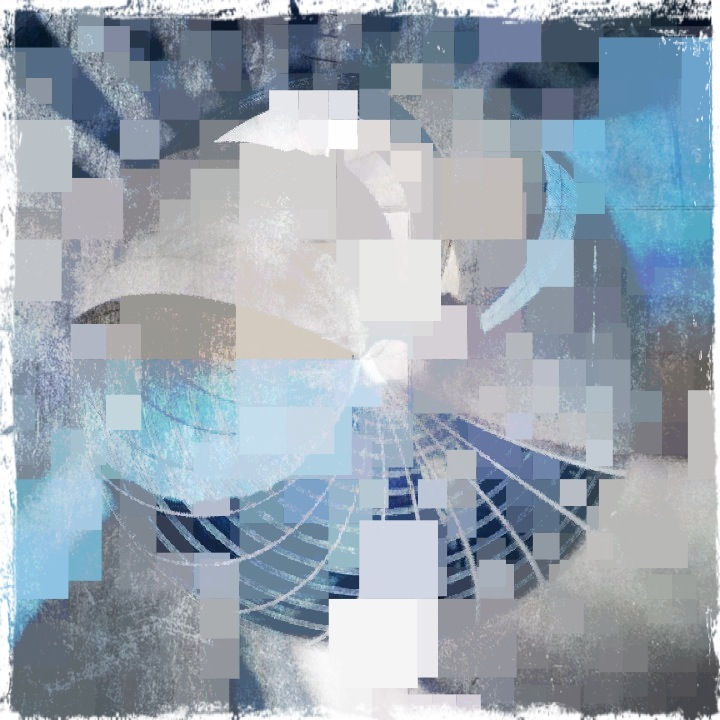
Immersion ©Linda Hollier
Examples of immersive tasks will include gathering with friends remotely, working with work colleagues collaboratively, and co-experiencing virtual events such as concerts. Many functions of life will move into virtual environments. Shopping and virtual travel will be available with an accompanying economy.
We started to experience some of these possibilities with Zoom during the pandemic, but what was missing in this 2D experience on screens was the networking experience that accompanies in-person events. This will be able to be replicated in a 3D immersive world.
I have recently joined Spatial, a metaverse with visually stunning, immersive 3D spaces. It has enabled me to customize my own virtual gallery and event space, and host live events, all of which at this point in time can be experienced via smartphone, laptop or a Meta Quest headset.
To navigate the metaverse, we are already hearing about and experiencing the “portal”. One moves between spaces and so one requires a way to do so.
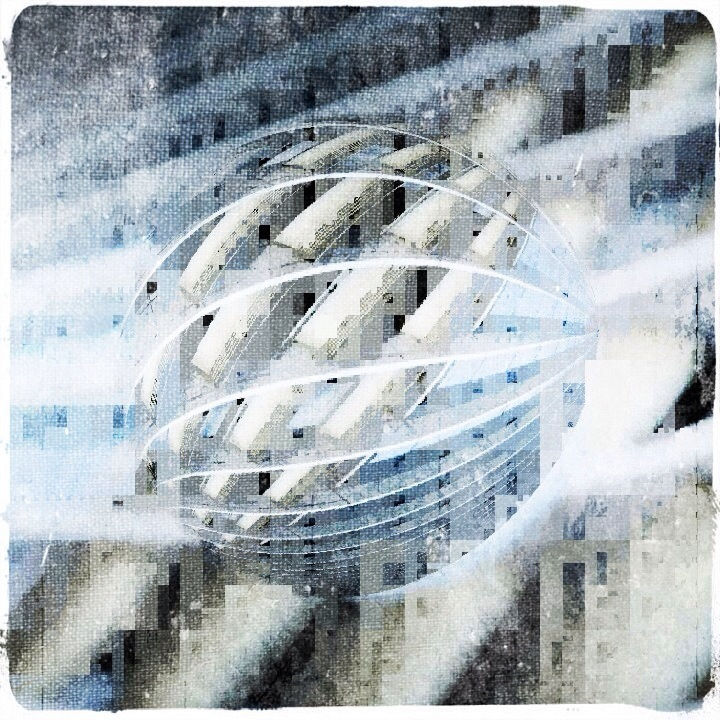
Stepping through.©Linda Hollier
Currently, by clicking on a portal one exits a space and enters another instantaneously. One is reminded of teleportation where one is transported across space and distance instantly. In the metaverse, a portal is opened, one’s avatar passes through, and there is fluid spatial switching.
Let us consider the choice of using the word “portal”.
In architecture the portal, whether it be a gateway or a doorway, is a space which is framed to call attention to spatial transition, In the 14th century, it referred to “the entire architectural treatment of the entrance and its surroundings of a cathedral or other grand building”. The structural elements alluded to something of high significance behind them.
Portal, from the Latin “porta” meaning “gate” and the Latin “portare” meaning “to carry” is also often used to mean a gateway to a realm in another dimension, another plane of existence.
The portal symbolizes spatial transition and has the characteristics of both a special place and a path.
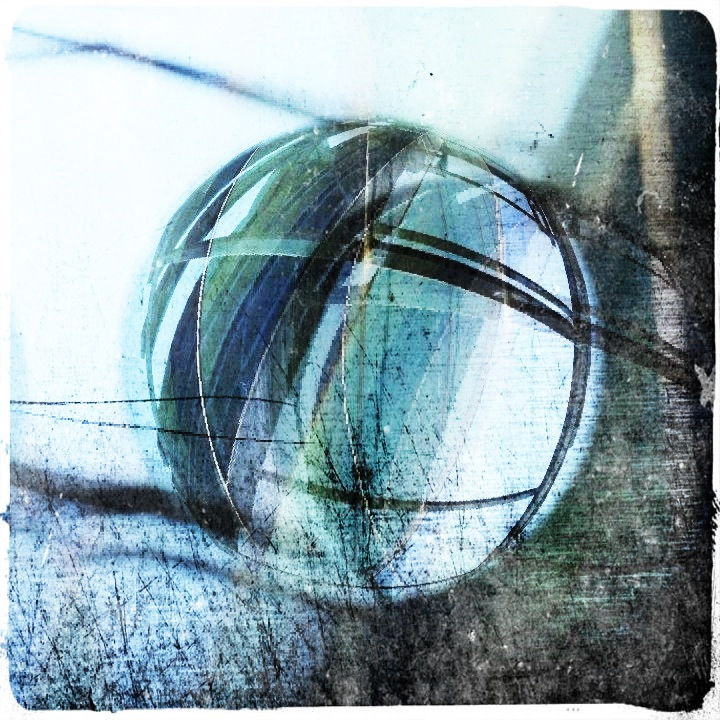
Threshold ©Linda Hollier
Most importantly, a portal implies a threshold - a significant instance or point which invokes or encourages a shift of perception before one goes forward.
Those of you who know me are aware of my interest in the architecture of cyberspace.
How will portals in the metaverse be depicted? We are already seeing circular forms. Will they eventually be so designed that they will be able to teleport our digital avatars not only from one space in a metaverse to another, but also from one metaverse to another when there are what is being referred to as multiverses? No doubt the portal will evolve until there is one possible omniverse.
My series titled “Navigating the Metaverse” is my current contribution to these new realms.
Individual pieces can be purchased on OpenSea as NFTs.